
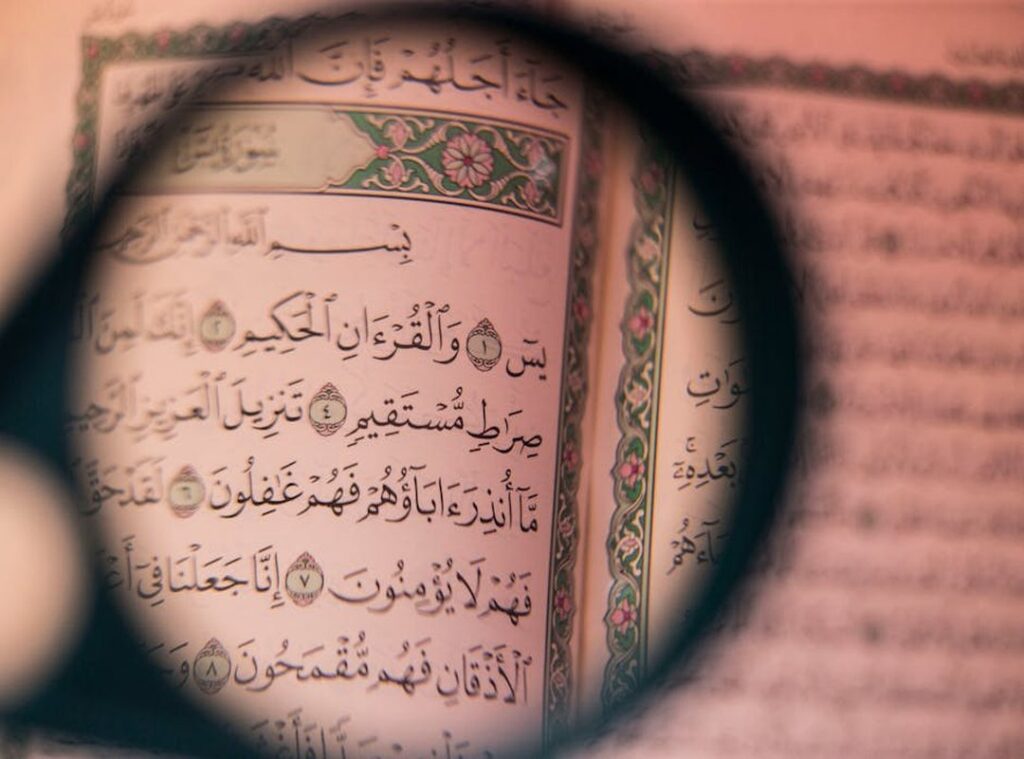
You might have heard Amin ya Rabbal Alamin in prayers or daily conversations. It’s a phrase that carries deep meaning and is often used to express a heartfelt plea for a prayer to be accepted by the Lord of all creation.
I’m here to provide the correct Arabic script, break down its beautiful meaning, and explain when and how to use it. Whether you’re learning about Islamic phrases or just curious, this guide will help.
This phrase is more than just words. It’s an expression of profound faith and hope. Let’s dive into what it means and why it’s so universally appealing.
The Arabic Script and Its Deep Meaning
آمِيْن يَا رَبَّ العَالَمِيْنَ
This phrase, “Amen, O Lord of the Worlds,” or “O Lord of all creation, please accept (our prayer),” is a powerful and meaningful expression in Arabic. Let’s break it down word by word to understand its components better.
- ‘Amin’ (آمِيْن): This means ‘Amen’ or ‘O Allah, please respond.’ It’s a plea for acceptance.
- ‘Ya’ (يَا): This is a particle used for calling out, equivalent to ‘O’ or ‘Oh.’
- ‘Rabb’ (رَبَّ): This means ‘Lord,’ ‘Master,’ and ‘Sustainer.’
- ‘al-‘Alamin’ (العَالَمِيْنَ): This means ‘the worlds,’ ‘all of creation,’ or ‘all that exists.’
Putting it all together, the phrase transforms a personal prayer into a universal appeal to the ultimate authority over everything. It’s a way of saying, “Amen, O Lord of all creation, please accept our prayer.”
Here’s a simple breakdown in a table:
| Word | Arabic Script | Meaning |
|---|---|---|
| Amin | آمِيْن | Amen, O Allah, please respond |
| Ya | يَا | O, Oh |
| Rabb | رَبَّ | Lord, Master, Sustainer |
| al-‘Alamin | العَالَمِيْنَ | The worlds, all of creation, all that exists |
Understanding this, you can see how amin ya rabbal alamin tulisan arab carries a deep and profound meaning, connecting the individual to the divine in a universal way.
The Proper Context: When and Why This Phrase Is Used
amin ya rabbal alamin is a phrase you’ll hear in various contexts, each with its own significance.
Immediately after finishing a personal prayer (dua) or after hearing someone else make a prayer for you, it’s common to say amin. It’s a way of affirming the prayer and asking God to accept it.
In congregational prayer (salah), the congregation says ‘Amin’ aloud after the Imam recites Surah Al-Fatihah. This collective affirmation strengthens the sense of unity and shared faith.
In everyday conversations, if someone says, “May you have a safe journey,” a proper response is amin ya rabbal alamin. It’s a humble acknowledgment that only God can grant such wishes.
The spiritual importance of the phrase lies in its role as an act of faith. It signifies humility and the belief that only God has the power to grant requests and answer prayers.
Saying amin is also an affirmation of one’s trust in God’s mercy and power over all things. It’s a simple yet profound way to connect with the divine in our daily lives.
| Context | Usage |
|---|---|
| Personal Prayer (Dua) | Affirming and asking God to accept the prayer |
| Congregational Prayer (Salah) | Saying ‘Amin’ aloud after the Imam recites Surah Al-Fatihah |
| Everyday Conversations | Responding to well-wishes, e.g., *amin ya rabbal alamin* |
Understanding these contexts can help you use the phrase more meaningfully.
A Simple Guide to Correct Pronunciation
Pronouncing Aa-meen Yaa Rub-bal Aa-la-meen can be a bit tricky, but it’s totally doable with some practice. Let’s break it down.
Aa-meen. The long ‘Aa’ sound is key here. It’s like the ‘a’ in “father,” not the short ‘a’ in “cat.”
Yaa. This one’s straightforward. It’s pronounced just like the English word “ya.” this guide
Rub-bal. Focus on the ‘u’ sound, which is like the ‘u’ in “put.” The ‘b’ is a regular ‘b’ sound, and ‘al’ is pronounced like “all.”
Aa-la-meen. Again, the long ‘Aa’ is important. It’s the same as in “Aa-meen.” The ‘ee’ at the end is like the ‘ee’ in “see.”
Now, about that ayn (ع) sound in Aa-la-meen. It’s a slight constriction in the back of the throat. Think of it as a soft, guttural ‘a’ sound.
It might take some time to get right, so don’t stress if it feels awkward at first.
amin ya rabbal alamin tulisan arab is the full phrase in Arabic script. Hearing it recited by someone experienced can really help. I recommend searching for videos of Surah Al-Fatihah recitation to hear it clearly and in context.
Remember, while correct pronunciation is encouraged, the sincerity of your intention behind saying the phrase is what truly matters most.
Answering Common Questions and Clarifying Variations
Question: What is the difference between writing ‘Amin’ vs. ‘Ameen’?
Answer: Both are English transliterations of the same Arabic word. Ameen is often used to emphasize the long ‘ee’ sound, but both are widely understood and accepted.
Question: Is it okay for a non-Arabic speaker to say this phrase?
Absolutely. It is a universal phrase for Muslims and anyone respectful of the Islamic faith worldwide, regardless of their native language.
Question: Is this phrase in the Quran?
While the word ‘Amin’ itself is not in the Quran, the practice of saying it after Surah Al-Fatihah is a confirmed tradition (Sunnah) of the Prophet Muhammad.
I’ve heard some people get hung up on the exact spelling. But honestly, it’s more about the intention behind the word. Whether you say amin or ameen, what matters is the sincerity in your heart.
The phrase amin ya rabbal alamin tulisan arab is a beautiful way to express that sentiment. It’s a reminder that no matter how we write or say it, the meaning and the spirit of the phrase remain the same.
Embracing the Power of Your Supplications
You now have the correct Arabic text, a clear understanding of its meaning, and the knowledge of how and when to use it. Amin ya rabbal alamin tulisan arab is not just a phrase; it’s a beautiful and powerful conclusion to any prayer. It connects your personal hopes and desires to the universal power of God.
Use this phrase with confidence and sincerity in your prayers and daily life. May you find peace and comfort in making supplications, knowing that your faith in their acceptance brings you closer to divine grace.

 There is a specific skill involved in explaining something clearly — one that is completely separate from actually knowing the subject. Vicky Skinneriez has both. They has spent years working with gardening and landscaping tips in a hands-on capacity, and an equal amount of time figuring out how to translate that experience into writing that people with different backgrounds can actually absorb and use.
Vicky tends to approach complex subjects — Gardening and Landscaping Tips, Home Improvement Essentials, Interior Renovation Ideas being good examples — by starting with what the reader already knows, then building outward from there rather than dropping them in the deep end. It sounds like a small thing. In practice it makes a significant difference in whether someone finishes the article or abandons it halfway through. They is also good at knowing when to stop — a surprisingly underrated skill. Some writers bury useful information under so many caveats and qualifications that the point disappears. Vicky knows where the point is and gets there without too many detours.
The practical effect of all this is that people who read Vicky's work tend to come away actually capable of doing something with it. Not just vaguely informed — actually capable. For a writer working in gardening and landscaping tips, that is probably the best possible outcome, and it's the standard Vicky holds they's own work to.
There is a specific skill involved in explaining something clearly — one that is completely separate from actually knowing the subject. Vicky Skinneriez has both. They has spent years working with gardening and landscaping tips in a hands-on capacity, and an equal amount of time figuring out how to translate that experience into writing that people with different backgrounds can actually absorb and use.
Vicky tends to approach complex subjects — Gardening and Landscaping Tips, Home Improvement Essentials, Interior Renovation Ideas being good examples — by starting with what the reader already knows, then building outward from there rather than dropping them in the deep end. It sounds like a small thing. In practice it makes a significant difference in whether someone finishes the article or abandons it halfway through. They is also good at knowing when to stop — a surprisingly underrated skill. Some writers bury useful information under so many caveats and qualifications that the point disappears. Vicky knows where the point is and gets there without too many detours.
The practical effect of all this is that people who read Vicky's work tend to come away actually capable of doing something with it. Not just vaguely informed — actually capable. For a writer working in gardening and landscaping tips, that is probably the best possible outcome, and it's the standard Vicky holds they's own work to.